Light designed for how a space feels, not just how it's lit.
Agrima designs layered lighting — ambient, task, and accent — as scenes on the same control system as the rest of your home, so the room shifts from morning to evening without you touching a switch.
Watch the light shift through a day.
Drag the slider or hit play — tunable white lighting moves from cool and bright at midday to warm and dim by night, following the same circadian curve we design into a real install. Or try it in a real room, with dimming, colour and motorised curtains →
Illustrative — real circadian curves are tuned to each room's orientation, use, and fixture spec.
Layers, not fixtures.
Four techniques, each solving a different problem in the same room. Click through to see what each one actually looks like.
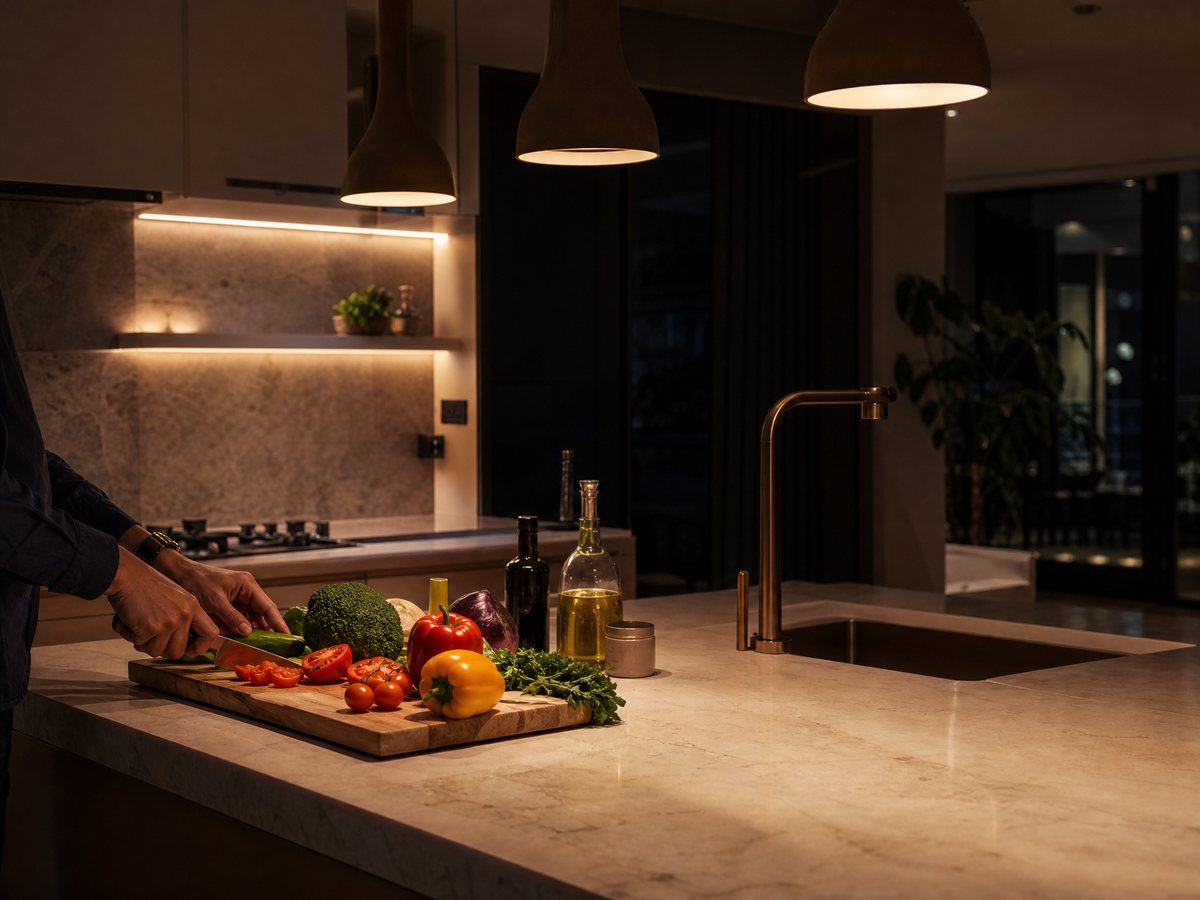
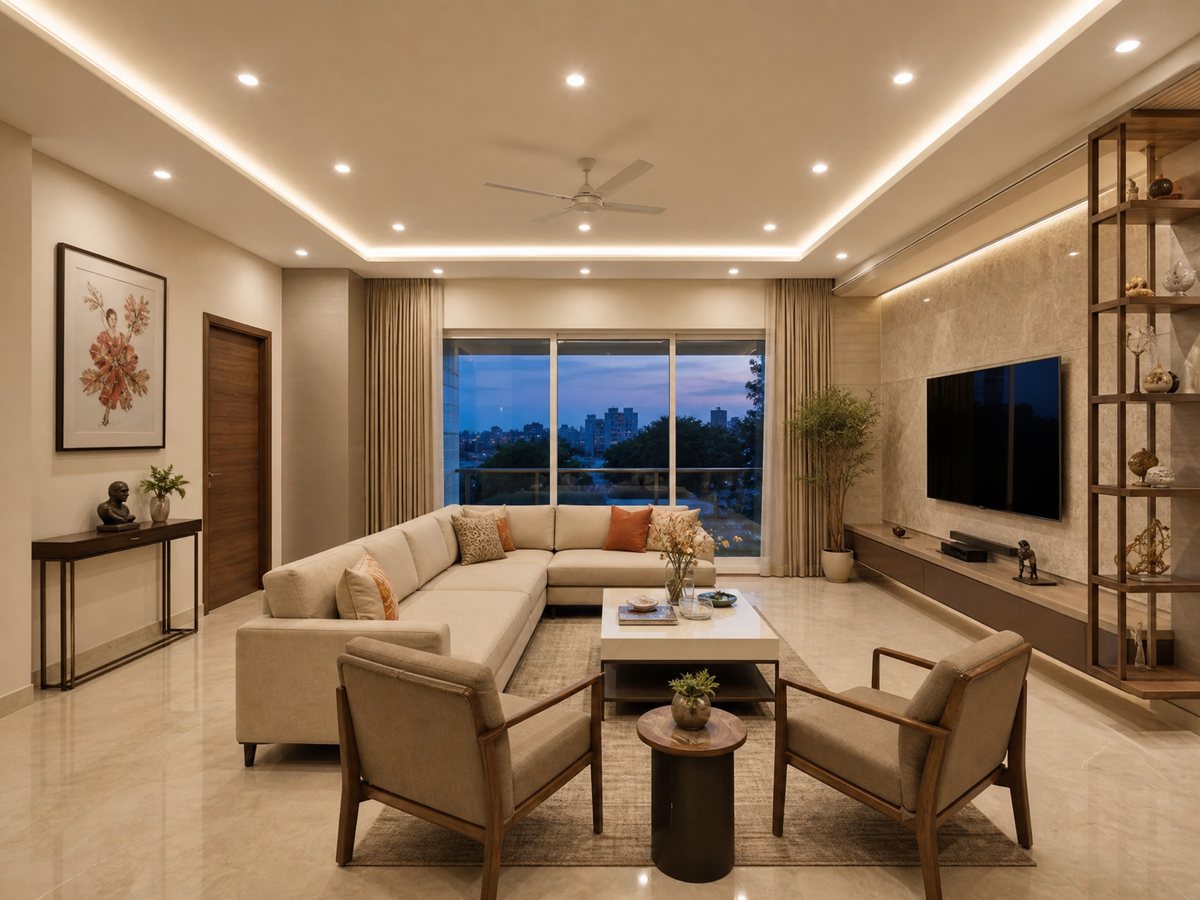
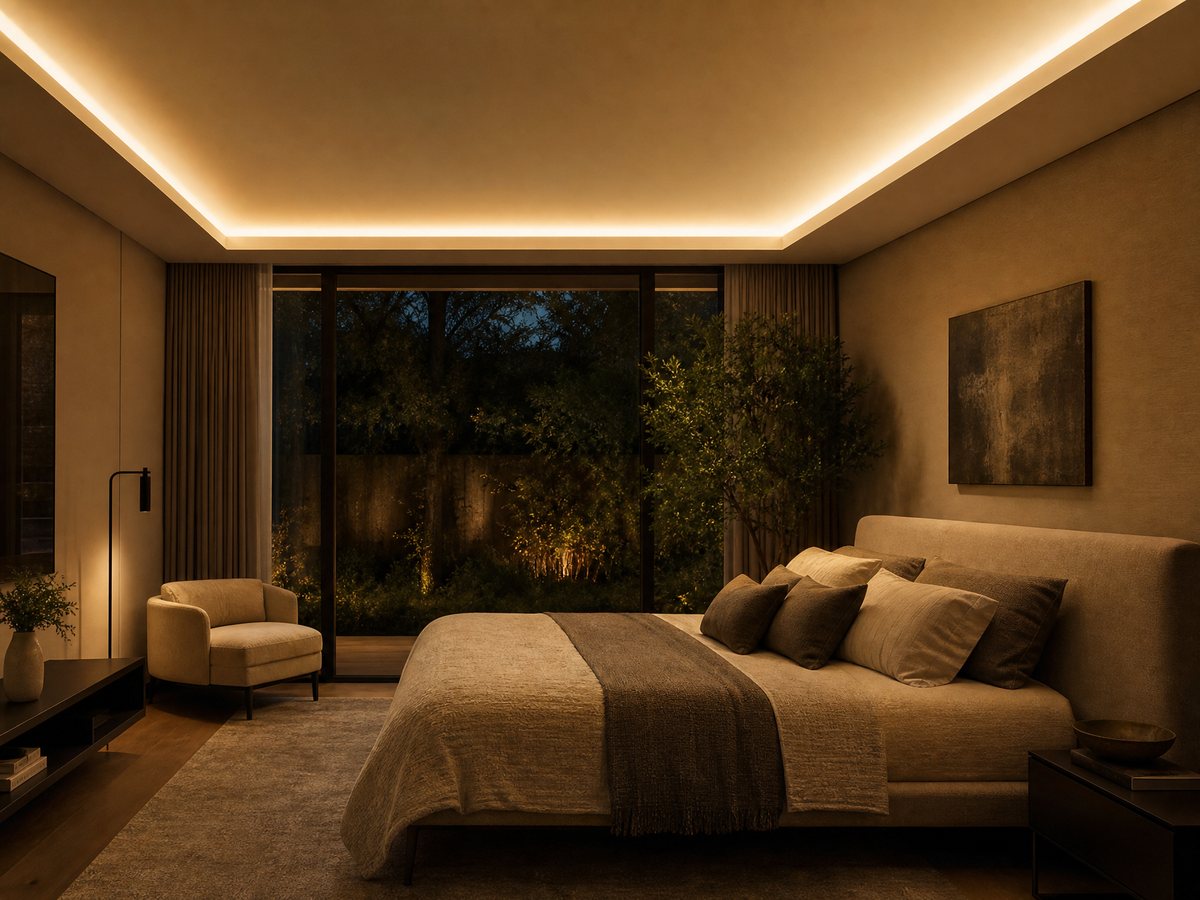
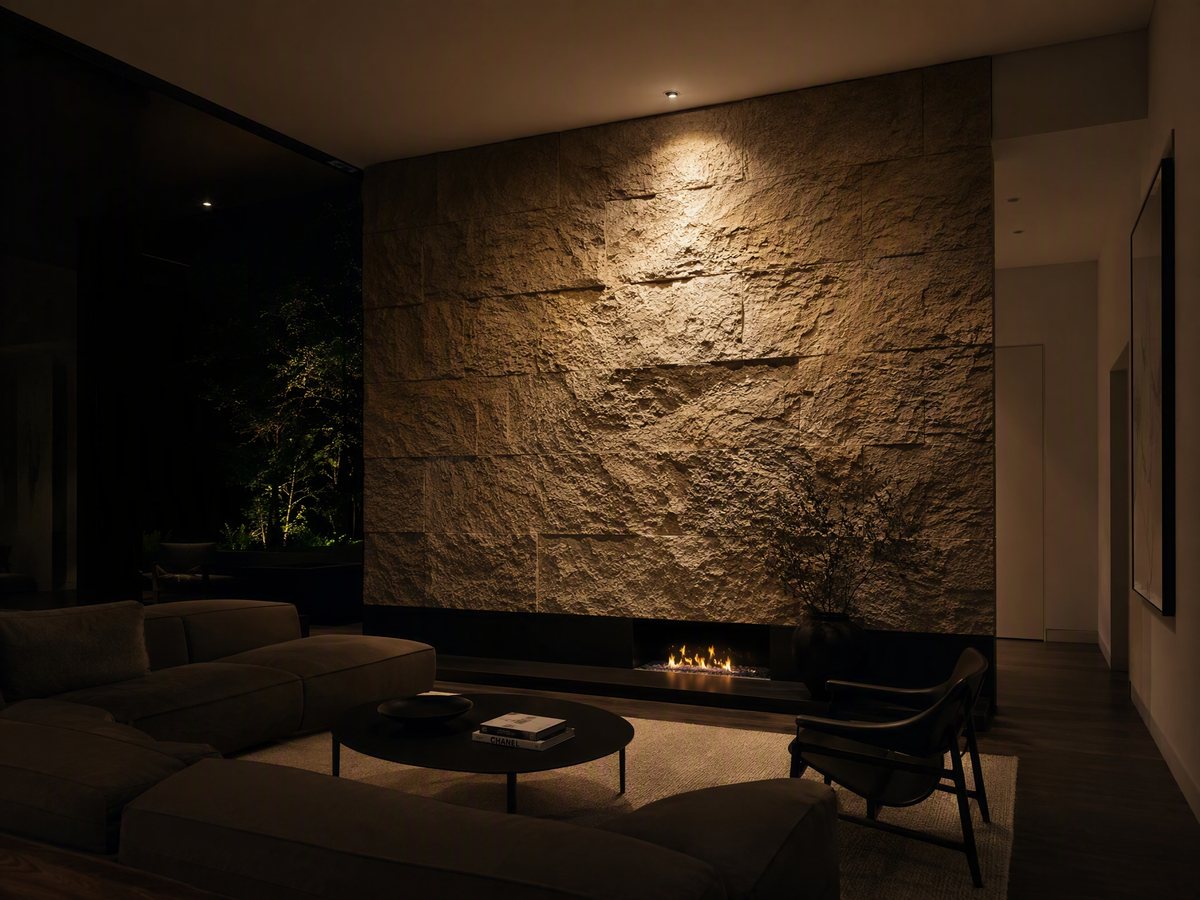
Task
Focused light exactly where work happens — a kitchen counter, a desk, a reading chair. Bright enough to see clearly, contained enough that it doesn't wash out the rest of the room.
General (Ambient)
The base layer. Even, comfortable illumination across the whole room with no harsh shadows or bright hotspots — what the room falls back to when nothing else is doing the work.
Indirect
The fixture disappears. Light is aimed at a ceiling or wall and bounces back into the room, so you see the glow, never the source — the technique behind cove lighting and the circadian curve above.
Accent (Ambience)
Deliberate drama. A narrow beam on one feature — art, texture, a facade — while everything else stays dim, so the eye goes exactly where it's meant to.
Lumens tell you almost nothing. Here's what actually matters.
Fixture spec sheets are built to make you compare the wrong number. A lighting design is judged on what actually lands on the surface, how a room's real colors and skin tones read under it, and how your body responds to it after dark — three things a lumens rating on a box never tells you.
Illuminance, not output
Lux — lumens per square metre at the work surface — is what a countertop or desk actually needs. Two fixtures rated at identical lumens can put very different lux on that surface depending on beam angle, optics, and mounting height. That's a calculation, not a spec-sheet comparison.
Color rendering, beyond CRI
CRI (Ra) averages just 8 pastel test colors — it can look fine on a spec sheet and still render skin tones, wood, and saturated fabric poorly. TM-30, the current ANSI/IES standard, scores fidelity (Rf) and saturation (Rg) separately across 99 colors — what we actually check before specifying a fixture for stone, wood, or upholstery-heavy interiors.
Circadian effect, not just color
Warm-to-cool tuning is only half of circadian lighting. The melanopic ratio of a fixture's spectrum — how strongly it stimulates the eye's non-visual receptors — is what actually drives the effect, and two fixtures at the same color temperature can differ meaningfully here. Color temperature alone doesn't tell you which one will keep a room feeling alert at 7pm.
Glare, not just brightness
A room can hit every lux target on paper and still feel harsh to sit in. Unified Glare Rating (UGR) predicts this — it's a function of fixture luminance, room surface reflectance, and viewing angle together, which is why the same downlight disappears in one ceiling height and glares straight into your eyes in another.
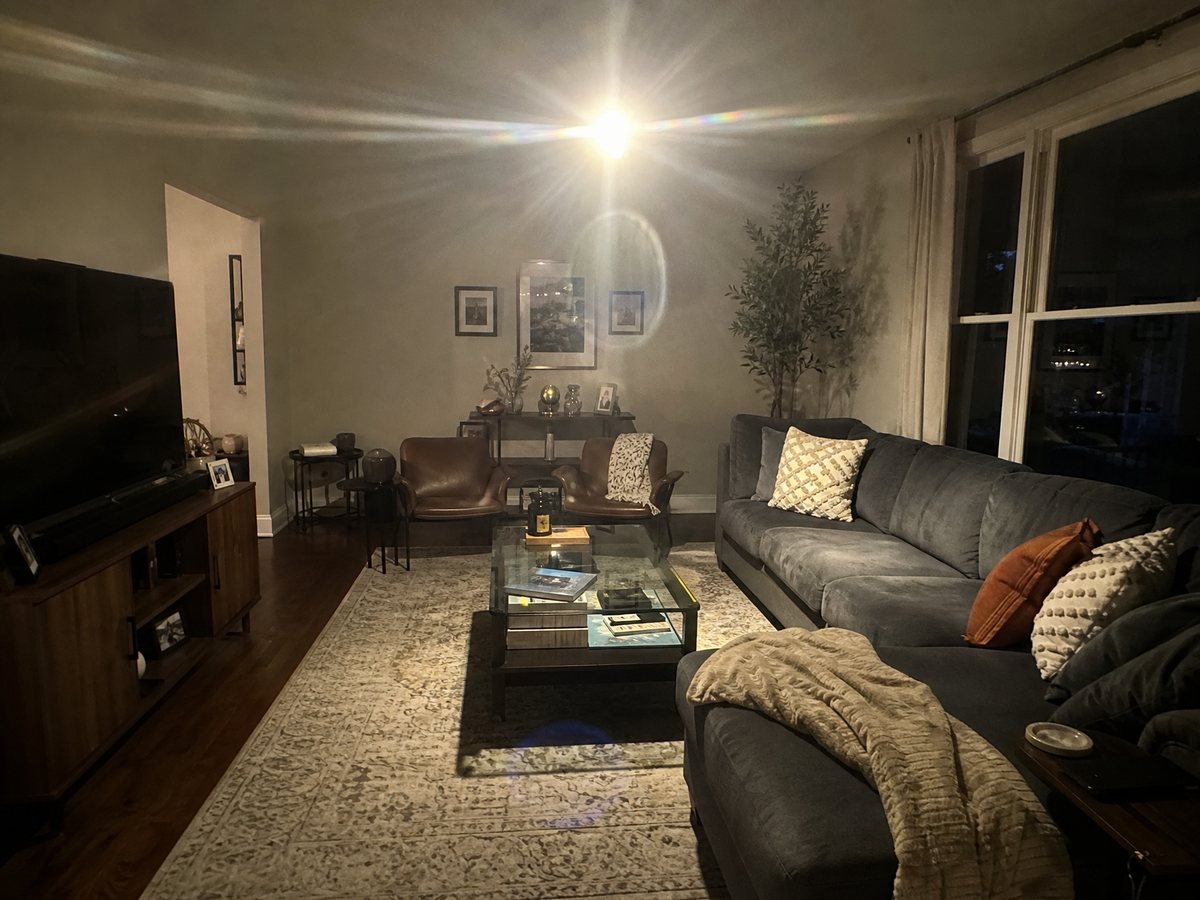
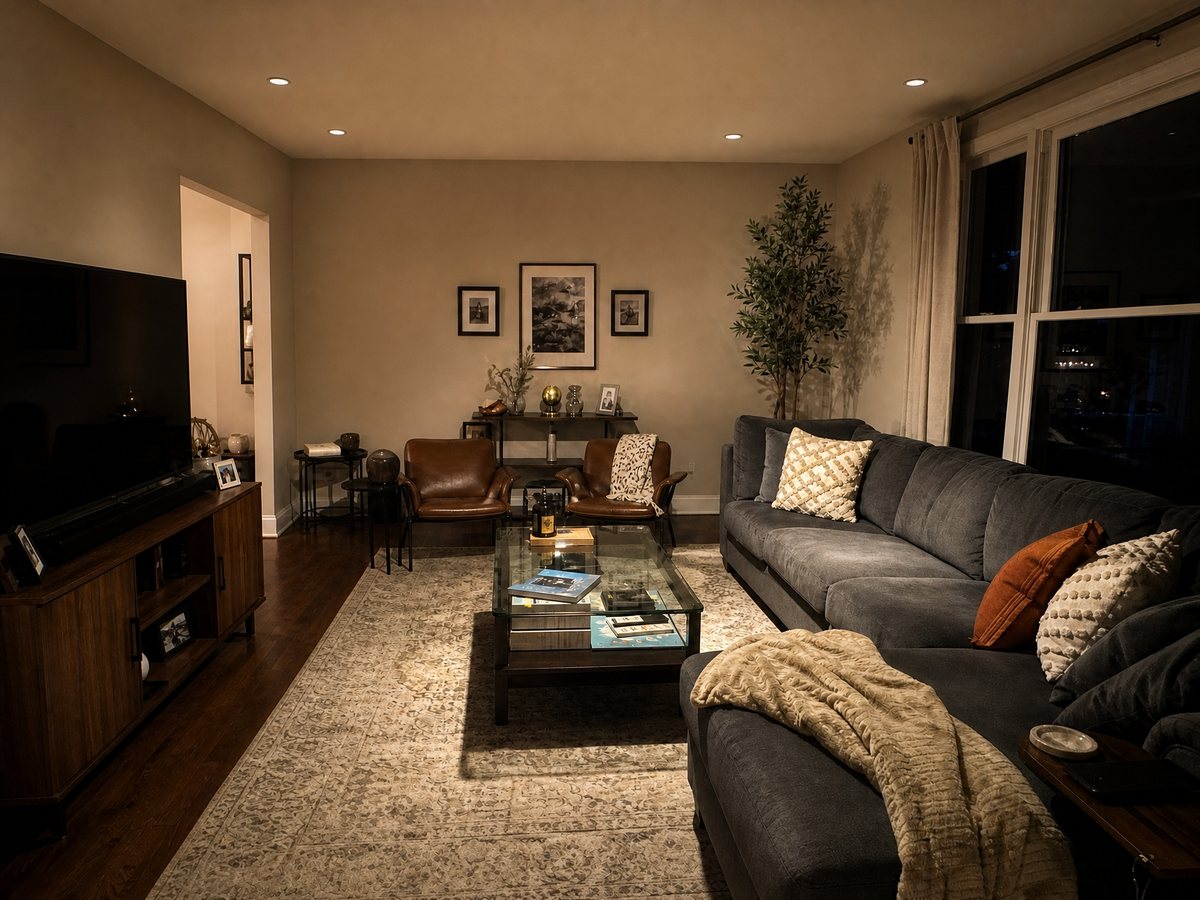
Same room. The only thing that changed is whether the fixture is shielded — the difference is the whole UGR argument above, seen rather than read.
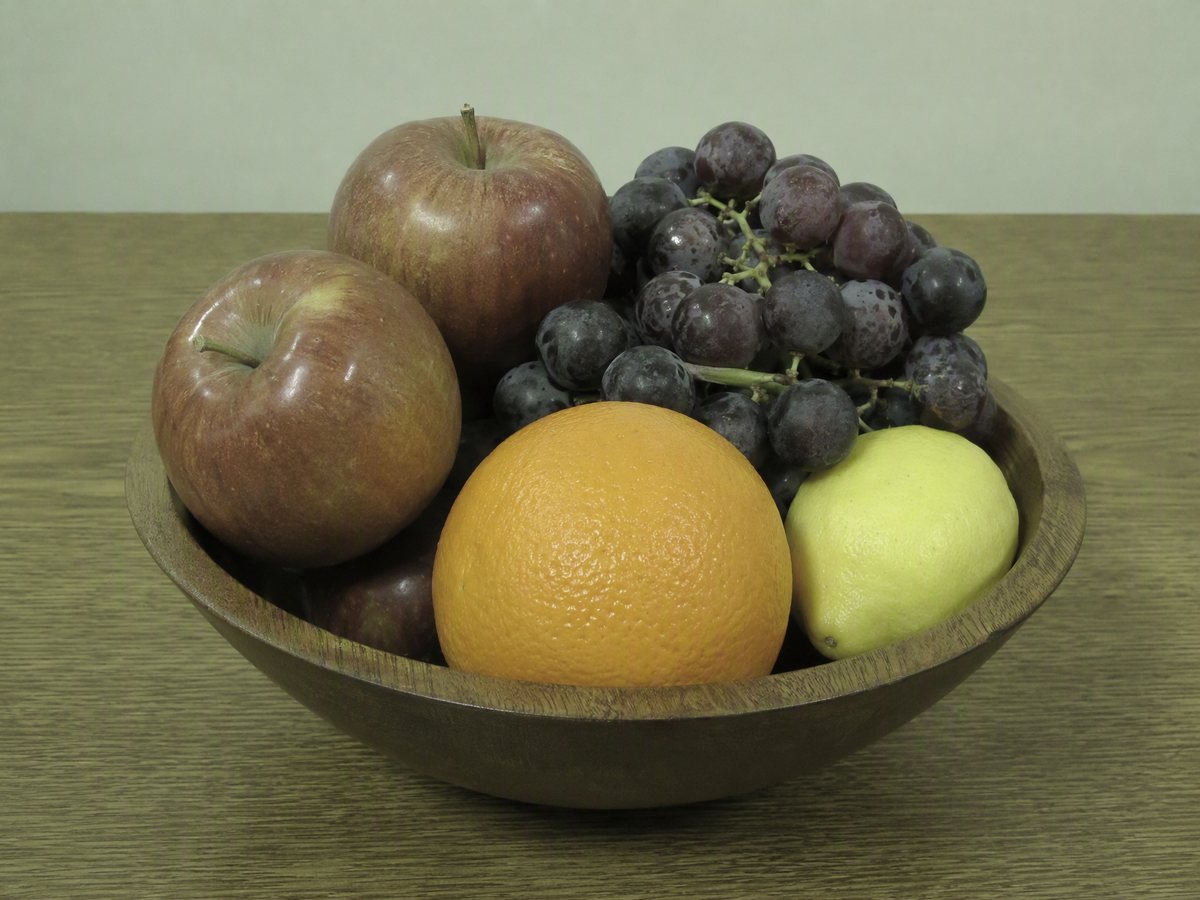
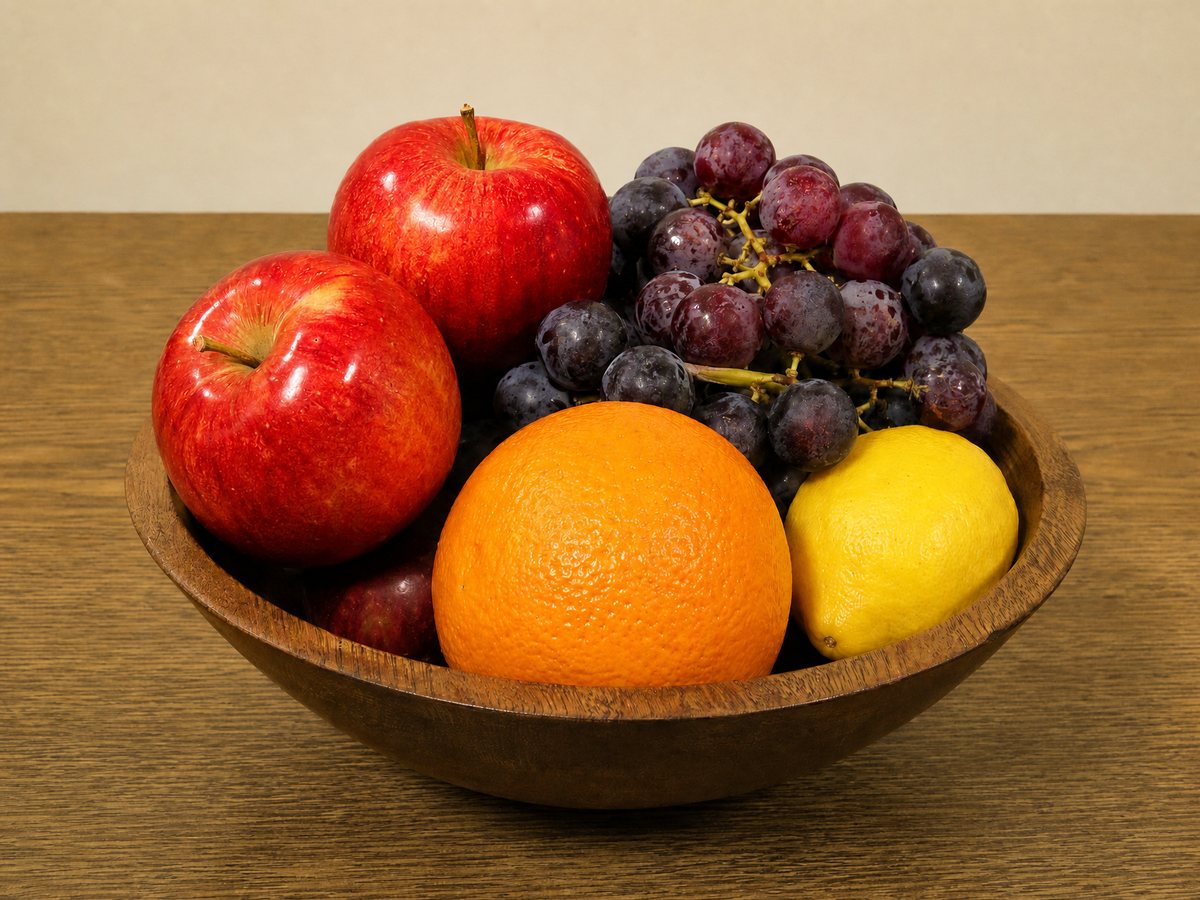
Same fruit, same table. Low-CRI light doesn't just look dim or yellow — it actively lies about what color things are.
Every layer, one control system.
Tunable white
Color temperature that shifts through the day — cooler for focus, warmer for evenings.
Scene programming
"Morning," "Dinner," "Movie Night," "Diwali" — one tap, every fixture in the room adjusts together.
Astronomic scheduling
Facade and landscape lighting that follows real sunrise/sunset times automatically.
Automation-integrated
Same keypads and app as climate, shades, and security — no separate lighting-only app.
For the keypads, scenes, and platform choice behind this control layer, see Lighting Control Systems.